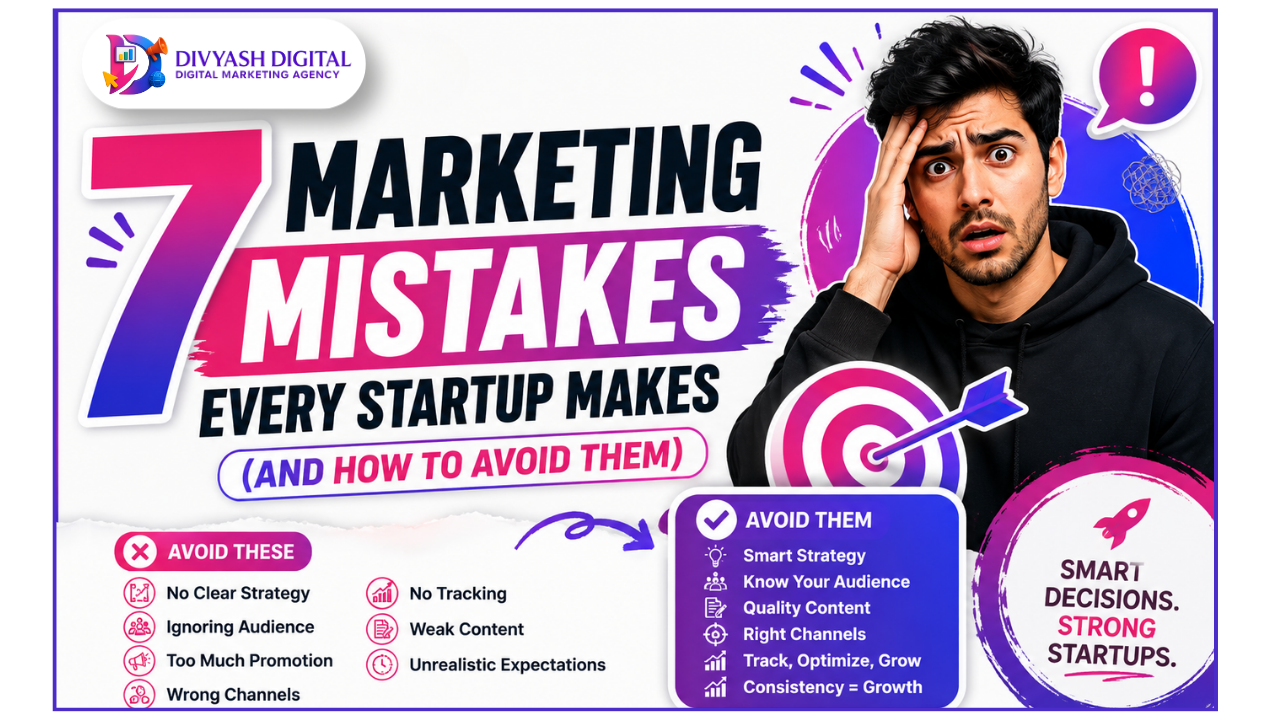
Launching a startup is exciting, but building a successful business takes more than just a great product or service. One of the biggest reasons startups fail isn’t because they lack innovation—it’s because they make avoidable marketing mistakes.
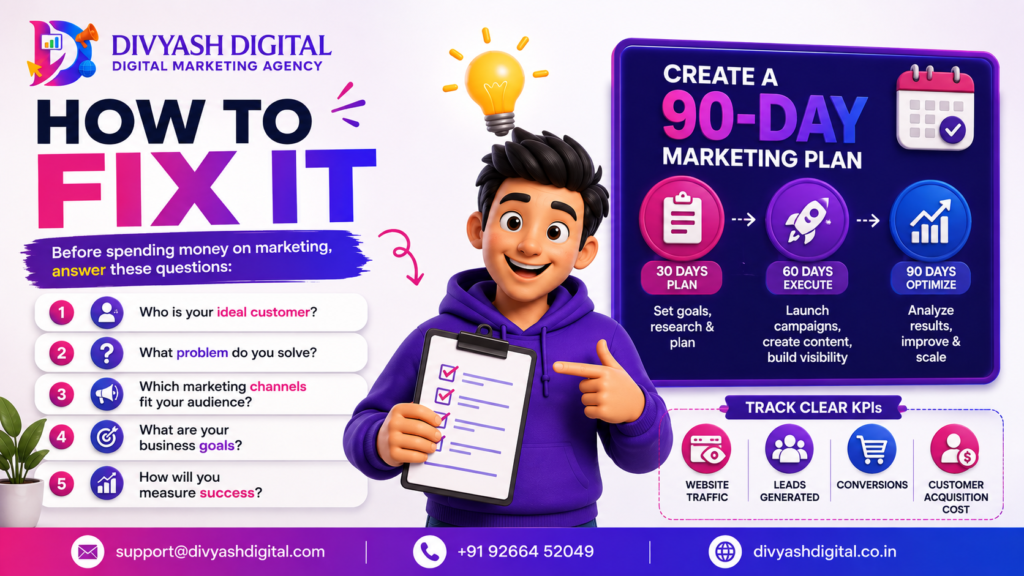
Many entrepreneurs believe that simply launching a website, posting on social media, or running a few ads will automatically attract customers. Unfortunately, that’s rarely the case. Effective marketing requires strategy, consistency, and a deep understanding of your audience.
In this guide, we’ll explore the 7 marketing mistakes every startup makes, why they happen, and how you can avoid them to build a stronger brand and achieve sustainable growth.
Why Marketing Matters for Startups
Marketing is more than promoting your business—it’s about creating awareness, building trust, and converting potential customers into loyal clients.
Without a clear marketing strategy, even the best products struggle to gain traction.
According to CB Insights, lack of market need and poor marketing execution are among the leading reasons startups fail. That’s why avoiding these common marketing mistakes can significantly improve your chances of success.
1. No Clear Marketing Strategy
“Jumping in without a plan leads to wasted time and money.”
Why It’s a Problem
Many startups begin posting randomly on Instagram, running Google Ads, or creating blogs without defining their goals. Without a roadmap, every marketing activity becomes guesswork.
Common signs of a weak strategy include:
Posting without a content calendar
Running ads without a target audience
No measurable goals
Inconsistent branding
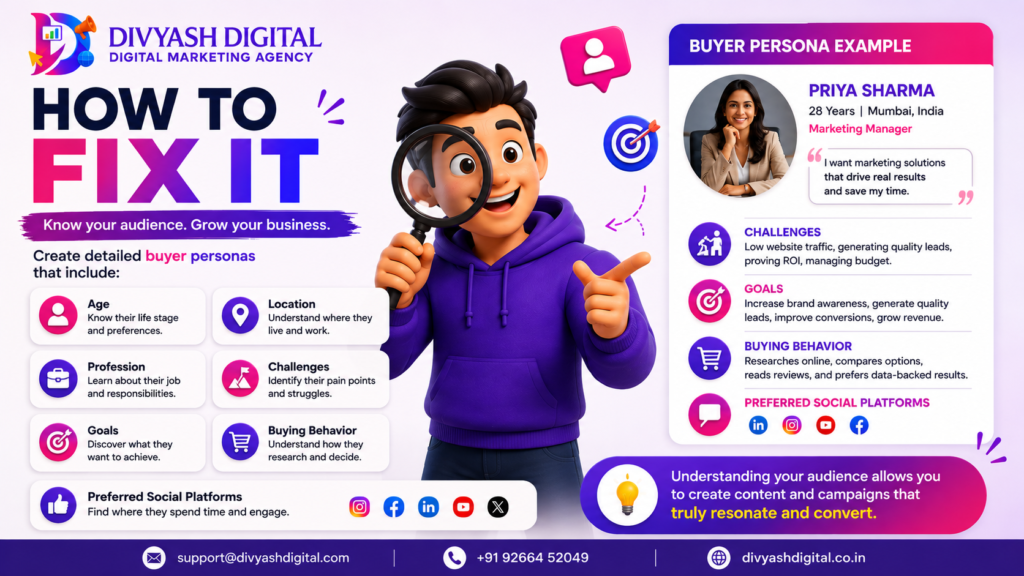
2. Ignoring Your Target Audience
“Trying to reach everyone means connecting with no one.”
Why It’s a Problem
One of the biggest startup marketing mistakes is assuming everyone is a potential customer. Broad messaging often fails because it doesn’t speak directly to anyone.
For example:
❌ “We provide digital marketing.”
✅ “We help startups generate more qualified leads through SEO and AI-powered marketing.”
The second message is specific, relevant, and memorable.
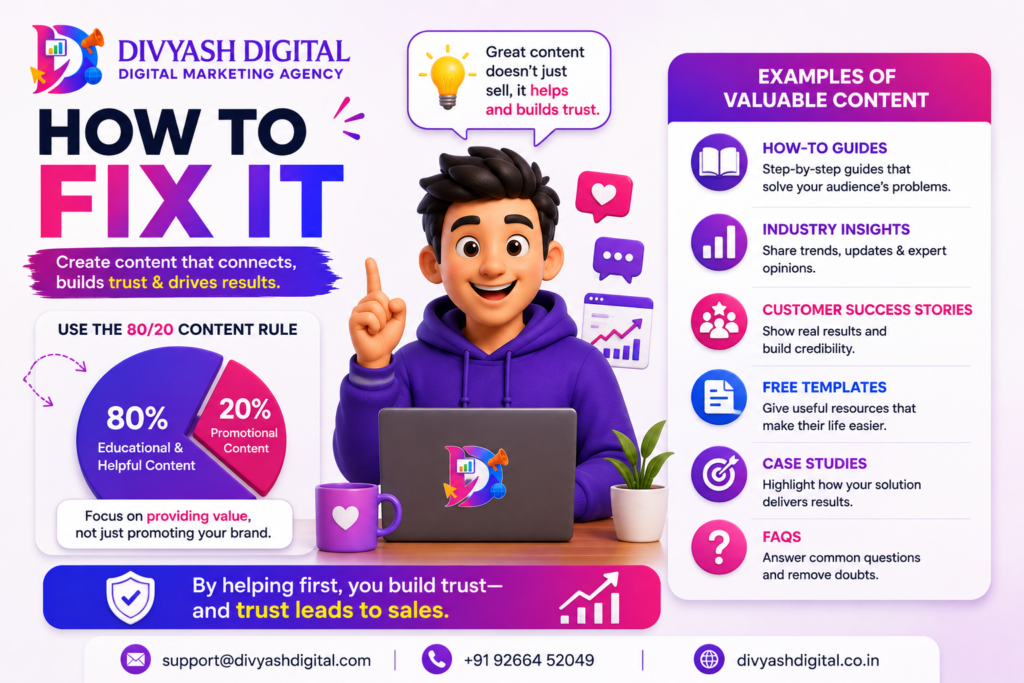
3. Focusing Only on Promotion
“Selling more, helping less.”
Why It’s a Problem
Customers don’t want to be sold to constantly. They want value, education, and solutions.
If every social media post says “Buy Now,” people will quickly lose interest.
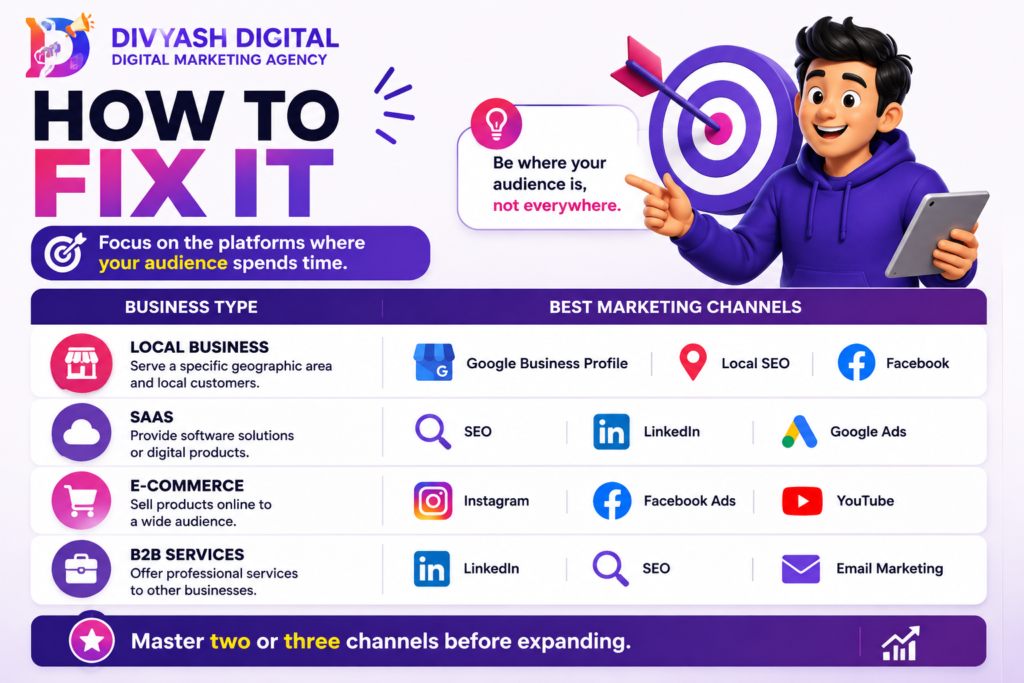
4. Choosing the Wrong Marketing Channels
“Being where your audience isn’t gets you nowhere.”
Why It’s a Problem
Every platform serves a different audience.
For example:
LinkedIn is ideal for B2B businesses.
Instagram works well for visual brands.
YouTube is excellent for educational content.
Google Search captures high-intent users.
Trying to be active on every platform often results in burnout and inconsistent quality.
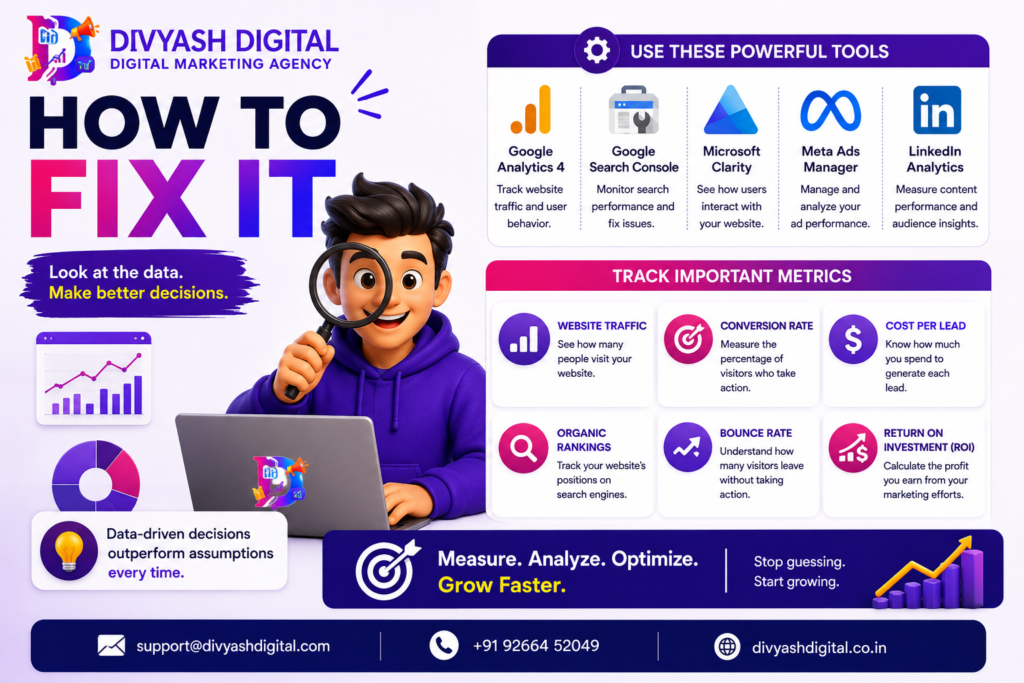
5. Not Tracking Results
“If you don’t measure, you can’t improve.”
Why It’s a Problem
Many startups spend money on marketing without knowing what’s actually working.
Without tracking, you can’t answer questions like:
Which campaign generates the most leads?
Which page has the highest conversions?
Which keywords drive traffic?
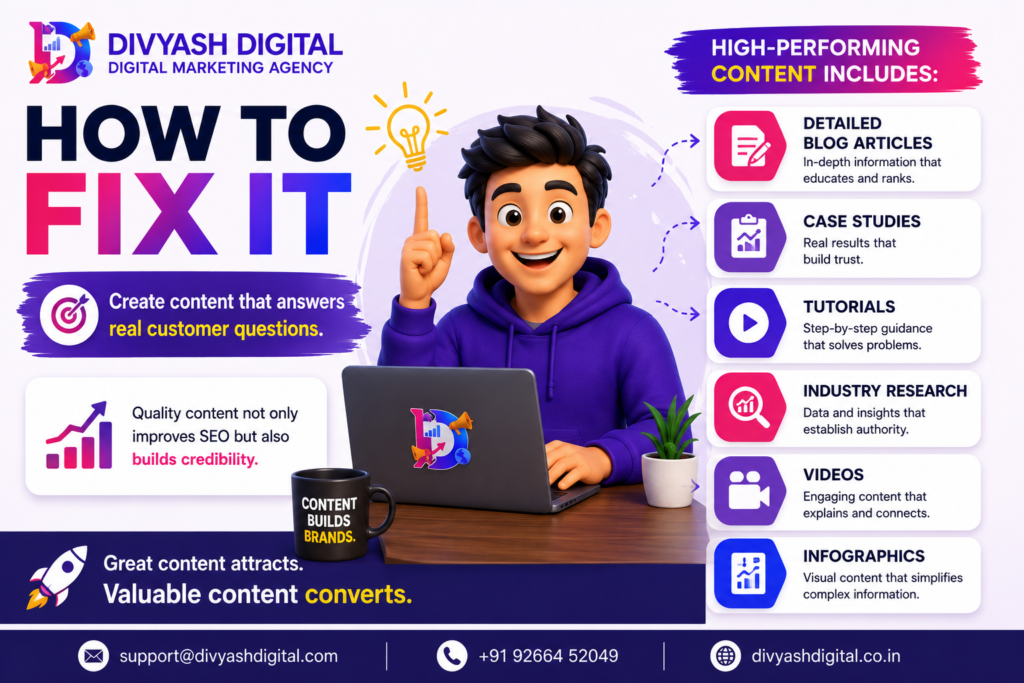
6. Publishing Poor-Quality Content
“Content that doesn’t connect won’t convert.”
Why It’s a Problem
Generic or AI-generated content without originality rarely performs well.
Google’s Helpful Content System rewards content that demonstrates real expertise, experience, authority, and trustworthiness (E-E-A-T).
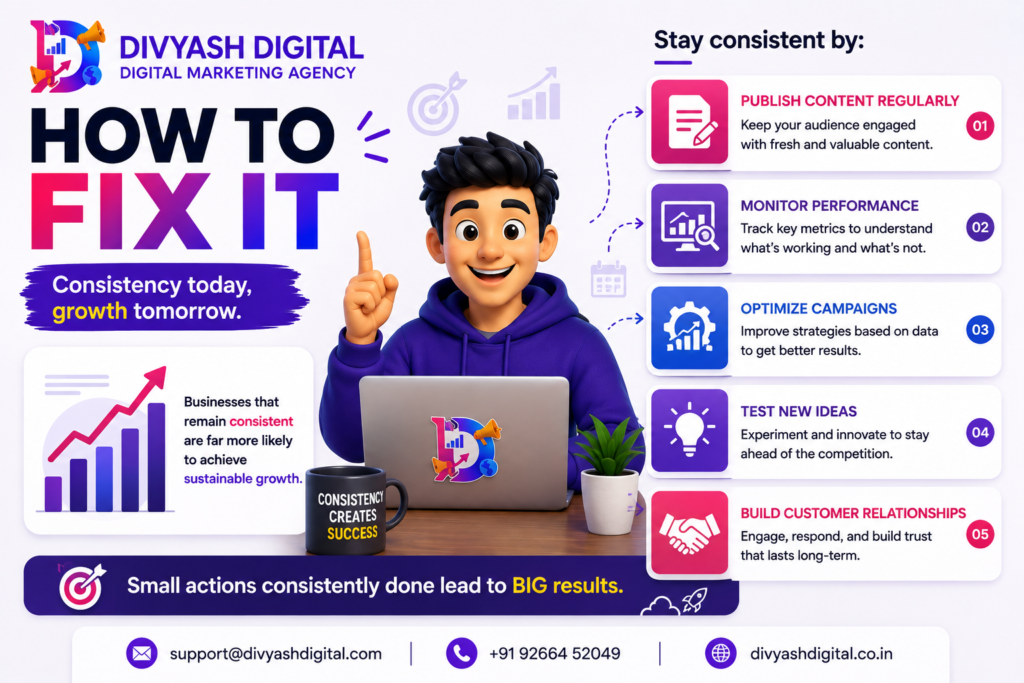
7. Expecting Quick Results
“Good marketing takes time and consistency.”
Why It’s a Problem
Many startups expect overnight success. When they don’t see immediate results, they stop marketing altogether.
Marketing is a long-term investment.
SEO, branding, and content marketing often take months to produce significant results—but the returns compound over time.
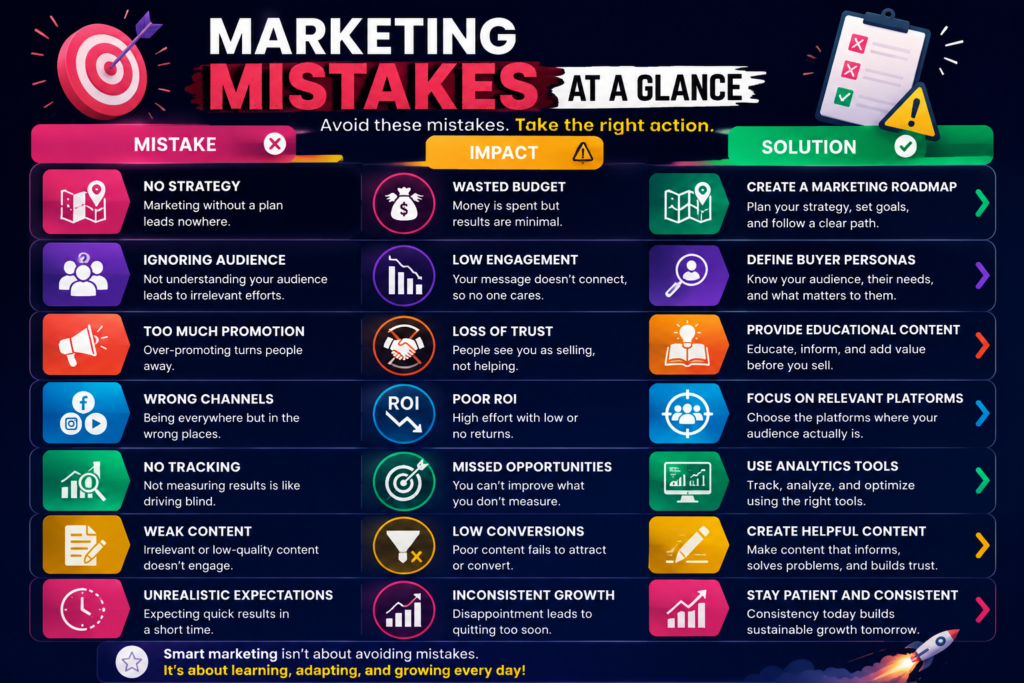
Marketing Mistakes at a Glance
Grow Your Startup with Divyash Digital
At Divyash Digital, we help startups build marketing systems that generate real business results.
Our services include:
SEO & Local SEO
Website Design & Development
Social Media Marketing
Google Ads & Meta Ads
Content Marketing
Branding & Creative Design
AI Search Optimization (AEO & GEO)
Whether you’re launching a new business or looking to scale your existing startup, we’ll help you create a marketing strategy that delivers measurable growth.
📞 Ready to grow smarter? Contact Divyash Digital today for a free marketing consultation.